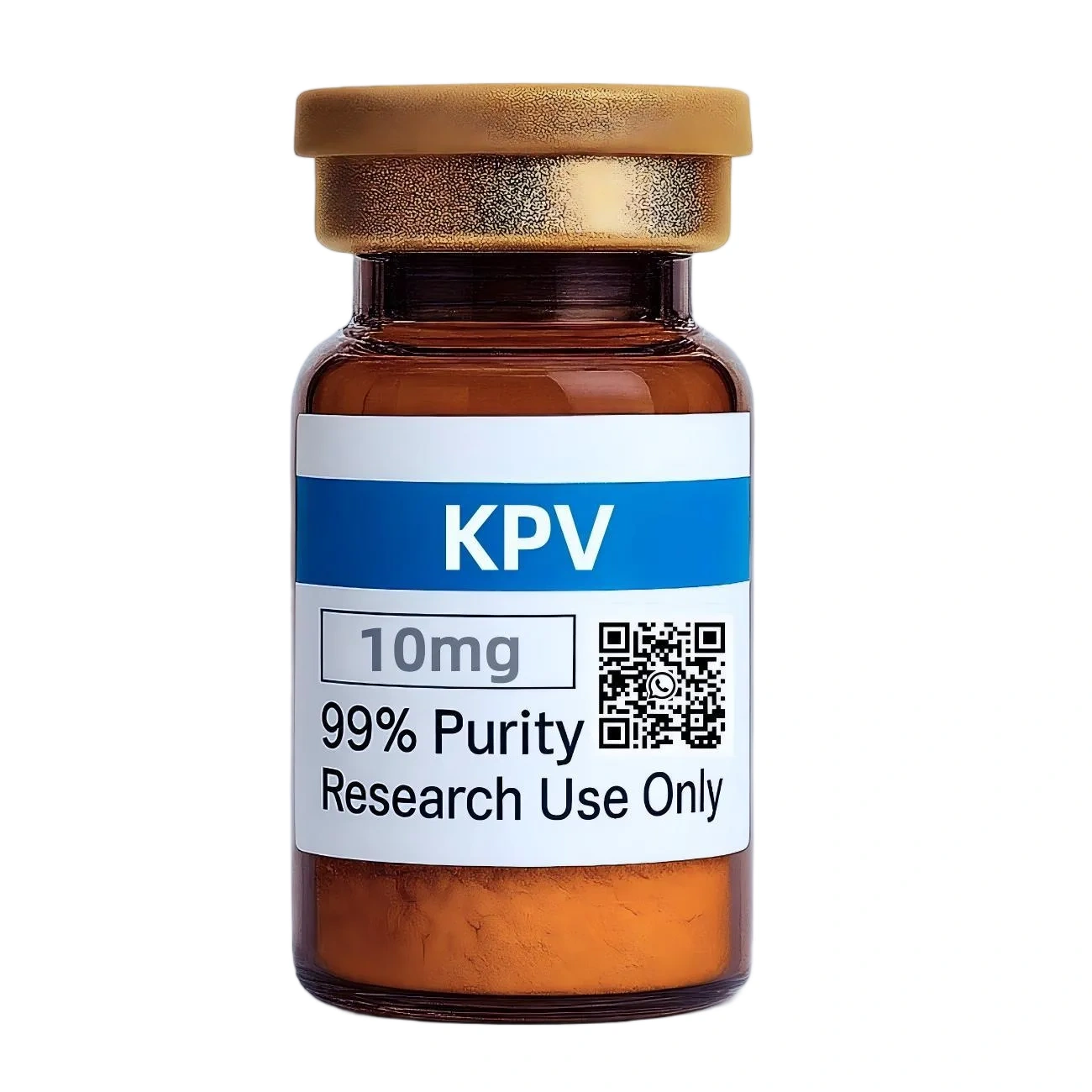
C-terminal tripeptide of α-melanocyte-stimulating hormone (α-MSH). Investigated in preclinical gut biology research for NF-κB pathway modulation and intestinal barrier function.
KPV is a research compound available through our china peptide catalog as a finished, lyophilized vial from an established Chinese manufacturer. It belongs to the α-MSH C-terminal tripeptide (MC1R agonist) Synonyms α-MSH(11-13), Lys-Pro-Val, L-Lysyl-L-Prolyl-L-Valine
Research Areas
Intestinal inflammation, IBD models, gut permeability, NF-κB inhibition, anti-microbial properties, oral delivery research
Available Variants
| Name | Strength | Pack Size | Purity | Availability |
|---|---|---|---|---|
| KPV | 10 mg | 10 vials | — | Out of Stock |
| KPV | 10 mg | 10 vials | ≥98% | In Stock |
Specification Highlights
Quality & Testing
Testing method: HPLC / LC-MS . Products are supplied against the specification shown on the applicable product page. The standard catalog purity specification is ≥98% unless otherwise stated. Product-specific specifications and quality-control information may vary by compound and batch. Every batch is tested by the manufacturer for purity and concentration as part of routine quality control, using methods such as HPLC and LC-MS. These results are kept in the manufacturer’s internal quality-control records and are not issued as a separate certificate or document.
Research Areas
Gastrointestinal Inflammation The most studied application of KPV is in gut inflammation models. In vivo colitis models in rodents have examined KPV’s anti-inflammatory effects in colonic tissue, with proposed mechanisms involving MC1R agonism, inhibition of NF-κB signaling, and reduction of pro-inflammatory cytokines including TNF-α, IL-6, and IL-1β. Intestinal Permeability KPV has been examined in models of intestinal barrier dysfunction. Research suggests potential restoration of tight junction protein expression under inflammatory conditions, providing a research model for studying gut permeability via a non-hormonal anti-inflammatory pathway distinct from corticosteroid mechanisms. Oral Delivery Research Unlike most peptides which are degraded in the GI tract, KPV’s tripeptide structure shows relative resistance to enzymatic cleavage, making it a model compound for studying oral peptide delivery strategies targeting intestinal inflammation without systemic absorption requirements. ## Sourcing KPV From China
KPV is available through our platform as a china peptide sourced directly from an established Chinese manufacturer. Three points define how we handle it:
- Factory-direct, not trader-sourced. We confirm availability and specification with the manufacturer before the order is confirmed. There is no intermediary resale of unknown-origin vials in this catalog.
- Specification before shipment. The purity and concentration specification shown on this page is the manufacturer’s batch specification. Product-specific quality-control information travels with the order.
- Research-use discipline. Like every listing in our catalog, KPV is supplied for laboratory research use only, under strict research-use terms.
For buyers comparing chinese peptides suppliers, the practical test is whether the seller can name the manufacturer and show the batch documentation. We work the other way around: the manufacturer and the documentation are the offer. Browse the full catalog or see how sourcing works.
Available Variants
| Name | Strength | Pack Size | Purity | Availability |
|---|---|---|---|---|
| KPV | 10 mg | 10 vials | — | Out of Stock |
| KPV | 10 mg | 10 vials | ≥98% | In Stock |
Specification Highlights
Quality & Testing
Testing method: HPLC / LC-MS . Products are supplied against the specification shown on the applicable product page. The standard catalog purity specification is ≥98% unless otherwise stated. Product-specific specifications and quality-control information may vary by compound and batch. Every batch is tested by the manufacturer for purity and concentration as part of routine quality control, using methods such as HPLC and LC-MS. These results are kept in the manufacturer’s internal quality-control records and are not issued as a separate certificate or document.
Research Areas
Gastrointestinal Inflammation The most studied application of KPV is in gut inflammation models. In vivo colitis models in rodents have examined KPV’s anti-inflammatory effects in colonic tissue, with proposed mechanisms involving MC1R agonism, inhibition of NF-κB signaling, and reduction of pro-inflammatory cytokines including TNF-α, IL-6, and IL-1β. Intestinal Permeability KPV has been examined in models of intestinal barrier dysfunction. Research suggests potential restoration of tight junction protein expression under inflammatory conditions, providing a research model for studying gut permeability via a non-hormonal anti-inflammatory pathway distinct from corticosteroid mechanisms. Oral Delivery Research Unlike most peptides which are degraded in the GI tract, KPV’s tripeptide structure shows relative resistance to enzymatic cleavage, making it a model compound for studying oral peptide delivery strategies targeting intestinal inflammation without systemic absorption requirements.
Compound Profile
KPV (Lys-Pro-Val) is a tripeptide representing the C-terminal fragment (positions 11-13) of α-Melanocyte-Stimulating Hormone (α-MSH), a naturally occurring anti-inflammatory neuropeptide produced in the hypothalamus and peripheral tissues. Research interest in KPV centers on its apparent ability to replicate the anti-inflammatory signaling of α-MSH through MC1R receptor interaction and intracellular NF-κB pathway inhibition — without the systemic pigmentation effects associated with full-length α-MSH. Preclinical research has focused on KPV primarily in gastrointestinal inflammation models, including Inflammatory Bowel Disease (IBD) and colitis models, with documented reduction of pro-inflammatory cytokines (TNF-α, IL-6, IL-1β) in animal studies. Its tripeptide structure and resistance to enzymatic degradation in the gut lumen have also made it a subject of oral peptide delivery research targeting intestinal inflammation through a non-hormonal anti-inflammatory pathway. Peptides of China supplies KPV as a lyophilized powder verified to 99%+ purity by HPLC and Mass Spectrometry. Every batch is tested by the manufacturer for purity and concentration as part of routine quality control. All products are intended for laboratory research use only and are not for human consumption.
Profile
Chemical Class α-MSH C-terminal tripeptide (MC1R agonist) Synonyms α-MSH(11-13), Lys-Pro-Val, L-Lysyl-L-Prolyl-L-Valine
Research Areas
Intestinal inflammation, IBD models, gut permeability, NF-κB inhibition, anti-microbial properties, oral delivery research
Available Variants
| Name | Strength | Pack Size | Purity | Availability |
|---|---|---|---|---|
| KPV | 10 mg | 10 vials | — | Out of Stock |
| KPV | 10 mg | 10 vials | ≥98% | In Stock |
Specification Highlights
Quality & Testing
Testing method: HPLC / LC-MS . Products are supplied against the specification shown on the applicable product page. The standard catalog purity specification is ≥98% unless otherwise stated. Product-specific specifications and quality-control information may vary by compound and batch. Every batch is tested by the manufacturer for purity and concentration as part of routine quality control, using methods such as HPLC and LC-MS. These results are kept in the manufacturer’s internal quality-control records and are not issued as a separate certificate or document.
Research Areas
Gastrointestinal Inflammation The most studied application of KPV is in gut inflammation models. In vivo colitis models in rodents have examined KPV’s anti-inflammatory effects in colonic tissue, with proposed mechanisms involving MC1R agonism, inhibition of NF-κB signaling, and reduction of pro-inflammatory cytokines including TNF-α, IL-6, and IL-1β. Intestinal Permeability KPV has been examined in models of intestinal barrier dysfunction. Research suggests potential restoration of tight junction protein expression under inflammatory conditions, providing a research model for studying gut permeability via a non-hormonal anti-inflammatory pathway distinct from corticosteroid mechanisms. Oral Delivery Research Unlike most peptides which are degraded in the GI tract, KPV’s tripeptide structure shows relative resistance to enzymatic cleavage, making it a model compound for studying oral peptide delivery strategies targeting intestinal inflammation without systemic absorption requirements.