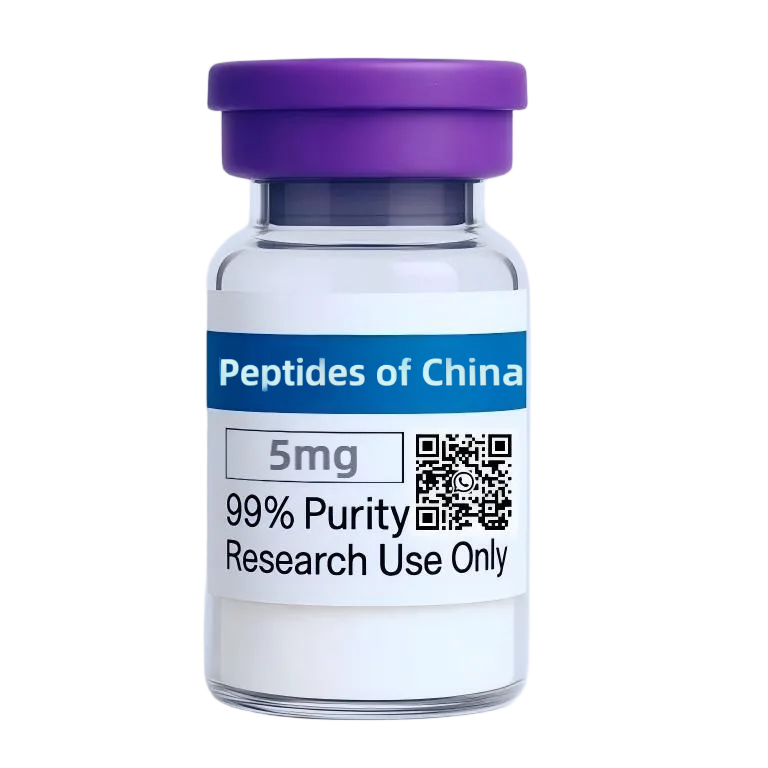
Wolverine Blend: BPC-157 + TB-500 combined blend. Purity tested per batch, sourced directly from China. Research use only.
Wolverine Blend is listed in our china peptide catalog as a finished research compound from an established Chinese manufacturer. It is catalogued under the Tissue Repair, Musculoskeletal, Healing & Recovery
Available Variants
| Name | Strength | Pack Size | Purity | Availability |
|---|---|---|---|---|
| BPC-157 5mg + TB-500 5mg | 10 mg | 10 vials | ≥98% | In Stock |
| BPC-157 5mg + TB-500 5mg | 10 mg | 10 vials | — | In Stock |
| BPC-157 10mg + TB-500 10mg | 20 mg | 10 vials | ≥98% | In Stock |
| BPC-157 10mg + TB-500 10mg | 20 mg | 10 vials | — | In Stock |
Specification Highlights
Quality & Testing
Testing method: HPLC / LC-MS . Products are supplied against the specification shown on the applicable product page. The standard catalog purity specification is ≥98% unless otherwise stated. Product-specific specifications and quality-control information may vary by compound and batch. Every batch is tested by the manufacturer for purity and concentration as part of routine quality control, using methods such as HPLC and LC-MS. These results are kept in the manufacturer’s internal quality-control records and are not issued as a separate certificate or document.
Research Areas
Musculoskeletal & Tendon Repair Research Both BPC-157 and TB-500 have been independently studied in Achilles tendon transection, anterior cruciate ligament (ACL) injury, and rotator cuff models in rats. BPC-157’s angiogenic activity (VEGFR-2 upregulation, NO-mediated vasodilation) promotes vascularisation of the avascular tendon midsubstance during healing. TB-500’s enhancement of satellite cell migration and actin remodelling supports myofibre regeneration in the adjacent musculature. Combination studies use histology (H&E, Masson’s trichrome for collagen), biomechanical testing (failure load, stiffness), and immunofluorescence for repair markers to characterise whether both mechanisms operate simultaneously and independently at the injury site. Gastrointestinal & Systemic Cytoprotection BPC-157 has an established preclinical cytoprotective profile in gastric ulcer, NSAID-induced GI lesion, and inflammatory bowel disease models, largely attributed to its stable gastric pentadecapeptide properties and upregulation of cytoprotective signalling (EGR-1, COX-2, NOS pathways). TB-500’s systemic anti-inflammatory activity — via downregulation of NF-κB and reduction of inflammatory cytokine expression — may complement BPC-157’s local GI protection in research designs examining systemic inflammation with concurrent GI stress. Combination assay designs use acetic acid ulcer models and TNBS colitis rodent protocols with concurrent systemic injury markers. Cardiac & Vascular Tissue Models TB-500 has documented cardioprotective effects in myocardial infarction rodent models — cardiac-specific thymosin beta-4 overexpression studies established its role in cardiomyocyte survival and coronary vessel formation. BPC-157 has been studied in fistula, anastomosis healing, and venous occlusion models relevant to vascular surgery research. The combination is of interest for cardiac I/R injury models where both angiogenic (BPC-157) and myocyte-protective (TB-500) mechanisms may contribute to infarct size reduction, measured by TTC staining, echocardiographic ejection fraction, and histological scar area. Combination Ratio & Dose-Response Research A methodological research question for combination peptide formulations is the optimal ratio and timing of administration relative to injury. Pre-treatment, concurrent, and post-injury dosing protocols have different implications for repair mechanisms, particularly whether vascularisation (BPC-157-dependent) must precede or accompany cellular migration (TB-500-dependent) for optimal healing. Dose-ranging studies using the 1:1 ratio (as in the Wolverine Blend formulation) versus variable ratios in specific injury models characterise whether one component dominates the repair response or both contribute proportionally. ## Sourcing Wolverine Blend From China
Wolverine Blend is available through our platform as a china peptide sourced directly from an established Chinese manufacturer. Three points define how we handle it:
- Factory-direct, not trader-sourced. We confirm availability and specification with the manufacturer before the order is confirmed. There is no intermediary resale of unknown-origin vials in this catalog.
- Specification before shipment. The purity and concentration specification shown on this page is the manufacturer’s batch specification. Product-specific quality-control information travels with the order.
- Research-use discipline. Like every listing in our catalog, Wolverine Blend is supplied for laboratory research use only, under strict research-use terms.
For buyers comparing chinese peptides suppliers, the practical test is whether the seller can name the manufacturer and show the batch documentation. We work the other way around: the manufacturer and the documentation are the offer. Browse the full catalog or see how sourcing works.
Available Variants
| Name | Strength | Pack Size | Purity | Availability |
|---|---|---|---|---|
| BPC-157 5mg + TB-500 5mg | 10 mg | 10 vials | ≥98% | In Stock |
| BPC-157 5mg + TB-500 5mg | 10 mg | 10 vials | — | In Stock |
| BPC-157 10mg + TB-500 10mg | 20 mg | 10 vials | ≥98% | In Stock |
| BPC-157 10mg + TB-500 10mg | 20 mg | 10 vials | — | In Stock |
Specification Highlights
Quality & Testing
Testing method: HPLC / LC-MS . Products are supplied against the specification shown on the applicable product page. The standard catalog purity specification is ≥98% unless otherwise stated. Product-specific specifications and quality-control information may vary by compound and batch. Every batch is tested by the manufacturer for purity and concentration as part of routine quality control, using methods such as HPLC and LC-MS. These results are kept in the manufacturer’s internal quality-control records and are not issued as a separate certificate or document.
Research Areas
Musculoskeletal & Tendon Repair Research Both BPC-157 and TB-500 have been independently studied in Achilles tendon transection, anterior cruciate ligament (ACL) injury, and rotator cuff models in rats. BPC-157’s angiogenic activity (VEGFR-2 upregulation, NO-mediated vasodilation) promotes vascularisation of the avascular tendon midsubstance during healing. TB-500’s enhancement of satellite cell migration and actin remodelling supports myofibre regeneration in the adjacent musculature. Combination studies use histology (H&E, Masson’s trichrome for collagen), biomechanical testing (failure load, stiffness), and immunofluorescence for repair markers to characterise whether both mechanisms operate simultaneously and independently at the injury site. Gastrointestinal & Systemic Cytoprotection BPC-157 has an established preclinical cytoprotective profile in gastric ulcer, NSAID-induced GI lesion, and inflammatory bowel disease models, largely attributed to its stable gastric pentadecapeptide properties and upregulation of cytoprotective signalling (EGR-1, COX-2, NOS pathways). TB-500’s systemic anti-inflammatory activity — via downregulation of NF-κB and reduction of inflammatory cytokine expression — may complement BPC-157’s local GI protection in research designs examining systemic inflammation with concurrent GI stress. Combination assay designs use acetic acid ulcer models and TNBS colitis rodent protocols with concurrent systemic injury markers. Cardiac & Vascular Tissue Models TB-500 has documented cardioprotective effects in myocardial infarction rodent models — cardiac-specific thymosin beta-4 overexpression studies established its role in cardiomyocyte survival and coronary vessel formation. BPC-157 has been studied in fistula, anastomosis healing, and venous occlusion models relevant to vascular surgery research. The combination is of interest for cardiac I/R injury models where both angiogenic (BPC-157) and myocyte-protective (TB-500) mechanisms may contribute to infarct size reduction, measured by TTC staining, echocardiographic ejection fraction, and histological scar area. Combination Ratio & Dose-Response Research A methodological research question for combination peptide formulations is the optimal ratio and timing of administration relative to injury. Pre-treatment, concurrent, and post-injury dosing protocols have different implications for repair mechanisms, particularly whether vascularisation (BPC-157-dependent) must precede or accompany cellular migration (TB-500-dependent) for optimal healing. Dose-ranging studies using the 1:1 ratio (as in the Wolverine Blend formulation) versus variable ratios in specific injury models characterise whether one component dominates the repair response or both contribute proportionally.
Compound Profile
Wolverine Blend is a pre-mixed lyophilized research formulation combining BPC-157 (Body Protection Compound-157) and TB-500 (Thymosin Beta-4 synthetic analogue) in a single vial. Each compound targets tissue repair through mechanistically distinct but complementary pathways: BPC-157 promotes angiogenesis, gastrointestinal cytoprotection, and musculotendinous repair via nitric oxide and growth factor signalling; TB-500 drives actin dynamics, cell migration, and anti-inflammatory signalling via thymosin beta-4’s sequestration of G-actin and activation of ILK (Integrin-Linked Kinase). The rationale for combination use is that these mechanisms operate in parallel, with BPC-157 primarily influencing vascular and GI repair and TB-500 primarily influencing skeletal muscle, connective tissue, and cardiac tissue remodelling. Available in 5 mg+5 mg and 10 mg+10 mg per vial formats. Preclinical studies examining BPC-157 and TB-500 individually in overlapping injury models provide the scientific basis for the combination. In rodent models of tendon, ligament, and musculoskeletal injury, BPC-157 accelerates tendon-to-bone healing and tenocyte proliferation while TB-500 enhances satellite cell mobilisation and myofibre regeneration — endpoints that are measured by different histological and functional assays. Research examining the combination aims to characterise whether their repair-promoting activities are additive or synergistic, using collagen synthesis, hydroxyproline content, breaking strength biomechanics, and immunohistochemistry for repair markers (CD31 for angiogenesis, PCNA for proliferation, alpha-SMA for myofibroblast activity). Peptides of China supplies Wolverine Blend as lyophilized powder in sealed vials. Each component is verified individually for purity by HPLC and confirmed by mass spectrometry before blending. Certificates of Analysis are available per batch. Wholesale quantities on request. For laboratory research use only.
Profile
Formulation Type Pre-mixed Lyophilized Research Blend Component 1 BPC-157 — 5 mg or 10 mg per vial Component 2 TB-500 — 5 mg or 10 mg per vial Available Formats 5+5 mg / vial and 10+10 mg / vial BPC-157 Mechanism Angiogenesis, cytoprotection, NO/VEGF signalling TB-500 Mechanism Actin sequestration (G-actin/Tβ4), ILK activation, cell migration Research Category Tissue Repair, Musculoskeletal, Healing & Recovery
Available Variants
| Name | Strength | Pack Size | Purity | Availability |
|---|---|---|---|---|
| BPC-157 5mg + TB-500 5mg | 10 mg | 10 vials | ≥98% | In Stock |
| BPC-157 5mg + TB-500 5mg | 10 mg | 10 vials | — | In Stock |
| BPC-157 10mg + TB-500 10mg | 20 mg | 10 vials | ≥98% | In Stock |
| BPC-157 10mg + TB-500 10mg | 20 mg | 10 vials | — | In Stock |
Specification Highlights
Quality & Testing
Testing method: HPLC / LC-MS . Products are supplied against the specification shown on the applicable product page. The standard catalog purity specification is ≥98% unless otherwise stated. Product-specific specifications and quality-control information may vary by compound and batch. Every batch is tested by the manufacturer for purity and concentration as part of routine quality control, using methods such as HPLC and LC-MS. These results are kept in the manufacturer’s internal quality-control records and are not issued as a separate certificate or document.
Research Areas
Musculoskeletal & Tendon Repair Research Both BPC-157 and TB-500 have been independently studied in Achilles tendon transection, anterior cruciate ligament (ACL) injury, and rotator cuff models in rats. BPC-157’s angiogenic activity (VEGFR-2 upregulation, NO-mediated vasodilation) promotes vascularisation of the avascular tendon midsubstance during healing. TB-500’s enhancement of satellite cell migration and actin remodelling supports myofibre regeneration in the adjacent musculature. Combination studies use histology (H&E, Masson’s trichrome for collagen), biomechanical testing (failure load, stiffness), and immunofluorescence for repair markers to characterise whether both mechanisms operate simultaneously and independently at the injury site. Gastrointestinal & Systemic Cytoprotection BPC-157 has an established preclinical cytoprotective profile in gastric ulcer, NSAID-induced GI lesion, and inflammatory bowel disease models, largely attributed to its stable gastric pentadecapeptide properties and upregulation of cytoprotective signalling (EGR-1, COX-2, NOS pathways). TB-500’s systemic anti-inflammatory activity — via downregulation of NF-κB and reduction of inflammatory cytokine expression — may complement BPC-157’s local GI protection in research designs examining systemic inflammation with concurrent GI stress. Combination assay designs use acetic acid ulcer models and TNBS colitis rodent protocols with concurrent systemic injury markers. Cardiac & Vascular Tissue Models TB-500 has documented cardioprotective effects in myocardial infarction rodent models — cardiac-specific thymosin beta-4 overexpression studies established its role in cardiomyocyte survival and coronary vessel formation. BPC-157 has been studied in fistula, anastomosis healing, and venous occlusion models relevant to vascular surgery research. The combination is of interest for cardiac I/R injury models where both angiogenic (BPC-157) and myocyte-protective (TB-500) mechanisms may contribute to infarct size reduction, measured by TTC staining, echocardiographic ejection fraction, and histological scar area. Combination Ratio & Dose-Response Research A methodological research question for combination peptide formulations is the optimal ratio and timing of administration relative to injury. Pre-treatment, concurrent, and post-injury dosing protocols have different implications for repair mechanisms, particularly whether vascularisation (BPC-157-dependent) must precede or accompany cellular migration (TB-500-dependent) for optimal healing. Dose-ranging studies using the 1:1 ratio (as in the Wolverine Blend formulation) versus variable ratios in specific injury models characterise whether one component dominates the repair response or both contribute proportionally.