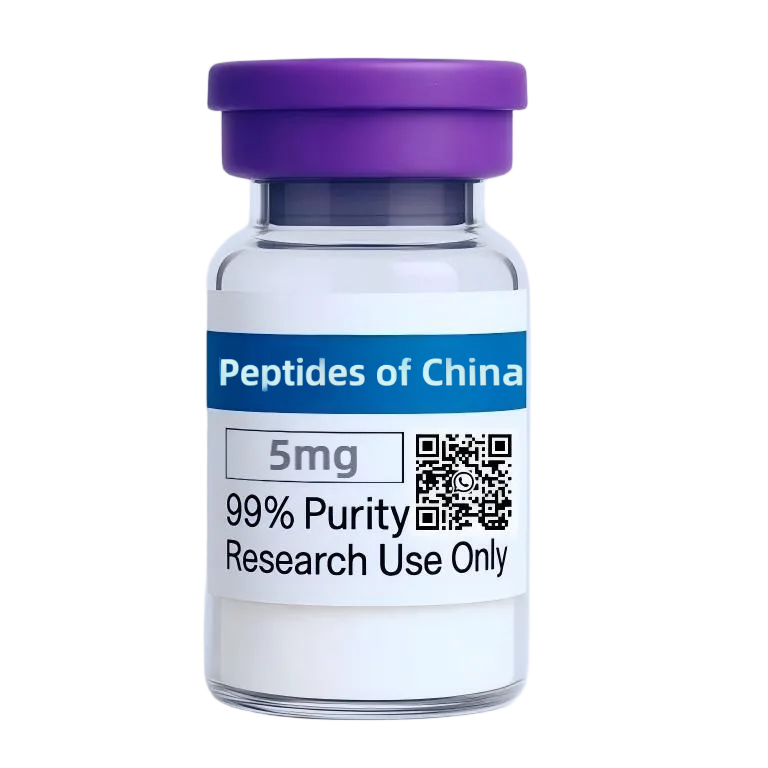
Dilute acetic acid solution for reconstitution of certain peptides.
Acetic Acid 0.6% is a research compound available through our china peptide catalog as a finished, lyophilized vial from an established Chinese manufacturer. It belongs to the Dilute organic acid solution (reconstitution solvent)
Available Variants
| Name | Strength | Pack Size | Purity | Availability |
|---|---|---|---|---|
| Acetic Acid 0.6% | 3 ml | 10 vials | Pharmaceutical grade | In Stock |
| Acetic Acid 0.6% | 10 ml | 10 vials | — | Out of Stock |
| Acetic Acid 0.6% | 10 ml | 10 vials | Pharmaceutical grade | In Stock |
Specification Highlights
Quality & Testing
Testing method: Sterile / endotoxin tested . Products are supplied against the specification shown on the applicable product page. The standard catalog purity specification is ≥98% unless otherwise stated. Product-specific specifications and quality-control information may vary by compound and batch. Every batch is tested by the manufacturer for purity and concentration as part of routine quality control, using methods such as HPLC and LC-MS. These results are kept in the manufacturer’s internal quality-control records and are not issued as a separate certificate or document.
Research Areas
Peptide Solubilization Research Research in peptide formulation has examined how solvent pH, ionic strength, and composition affect peptide solubility and aggregation state. For aggregation-prone peptides, the relationship between solvent pH and peptide charge state (determined by amino acid pKa values) determines the solubility window. Acetic acid at 0.6% provides a standardized acidic environment that maximizes basic residue protonation and electrostatic repulsion — a primary mechanism for disaggregating hydrophobic peptides before physiological dilution. Peptide Stability and Hydrolysis Research Acidic conditions can cause peptide backbone hydrolysis, particularly at Asp-X bonds (D-X fragmentation is acid-catalyzed). Research has characterized the stability of research peptides in 0.6% acetic acid over time — quantifying hydrolysis products by HPLC-MS. The 0.6% concentration is chosen as a practical compromise between dissolution efficiency and peptide chemical stability. Reconstituted solutions in acetic acid should be diluted to working pH promptly and not stored long-term in the acidic vehicle. Vehicle Control and pH Effect Research When using acetic acid as a reconstitution vehicle in in vivo research, vehicle controls must account for both the acetic acid and the pH of the final injected solution. Studies examining the biological effects of acetic acid vehicle versus PBS vehicle in subcutaneous or intraperitoneal injection models have characterized the local tissue response, demonstrating that dilute acetic acid at final concentrations of 0.05-0.1% (after peptide dilution) is well-tolerated at research injection volumes. ## Sourcing Acetic Acid 0.6% From China
Acetic Acid 0.6% is available through our platform as a china peptide sourced directly from an established Chinese manufacturer. Three points define how we handle it:
- Factory-direct, not trader-sourced. We confirm availability and specification with the manufacturer before the order is confirmed. There is no intermediary resale of unknown-origin vials in this catalog.
- Specification before shipment. The purity and concentration specification shown on this page is the manufacturer’s batch specification. Product-specific quality-control information travels with the order.
- Research-use discipline. Like every listing in our catalog, Acetic Acid 0.6% is supplied for laboratory research use only, under strict research-use terms.
For buyers comparing chinese peptides suppliers, the practical test is whether the seller can name the manufacturer and show the batch documentation. We work the other way around: the manufacturer and the documentation are the offer. Browse the full catalog or see how sourcing works.
Compound Profile
Acetic Acid 0.6% (glacial acetic acid diluted to 0.6% v/v in sterile water) is a specialized reconstitution solvent used primarily for peptides with poor aqueous solubility at neutral pH. Many hydrophobic or aggregation-prone research peptides — particularly GHRH analogues, IGF-1 fragments, and GH-releasing peptides — require an acidic solvent to achieve complete dissolution before subsequent dilution to working concentration. Acetic acid’s carboxyl group protonates basic residues (Arg, Lys, His) in the peptide sequence, increasing electrostatic repulsion between peptide molecules and reducing intermolecular aggregation. The 0.6% concentration (approximately 0.1 M) is a widely used standard in peptide reconstitution research, providing sufficient acidity to dissolve aggregation-prone peptides while remaining dilute enough to minimize acid-induced peptide backbone hydrolysis that occurs at higher acid concentrations. After initial reconstitution in 0.6% acetic acid, the solution is typically diluted 5-10 fold with PBS, BAC water, or saline to achieve target concentration and near-physiological pH for research administration. The final pH of the working solution will depend on the dilution ratio and the buffering capacity of the diluent. Peptides of China supplies Acetic Acid 0.6% as a sterile solution specifically prepared for peptide reconstitution research. Every batch is tested by the manufacturer for purity and concentration as part of routine quality control. All products are for laboratory research use only.
Profile
Available Variants
| Name | Strength | Pack Size | Purity | Availability |
|---|---|---|---|---|
| Acetic Acid 0.6% | 3 ml | 10 vials | Pharmaceutical grade | In Stock |
| Acetic Acid 0.6% | 10 ml | 10 vials | — | Out of Stock |
| Acetic Acid 0.6% | 10 ml | 10 vials | Pharmaceutical grade | In Stock |
Specification Highlights
Quality & Testing
Testing method: Sterile / endotoxin tested . Products are supplied against the specification shown on the applicable product page. The standard catalog purity specification is ≥98% unless otherwise stated. Product-specific specifications and quality-control information may vary by compound and batch. Every batch is tested by the manufacturer for purity and concentration as part of routine quality control, using methods such as HPLC and LC-MS. These results are kept in the manufacturer’s internal quality-control records and are not issued as a separate certificate or document.
Research Areas
Peptide Solubilization Research Research in peptide formulation has examined how solvent pH, ionic strength, and composition affect peptide solubility and aggregation state. For aggregation-prone peptides, the relationship between solvent pH and peptide charge state (determined by amino acid pKa values) determines the solubility window. Acetic acid at 0.6% provides a standardized acidic environment that maximizes basic residue protonation and electrostatic repulsion — a primary mechanism for disaggregating hydrophobic peptides before physiological dilution. Peptide Stability and Hydrolysis Research Acidic conditions can cause peptide backbone hydrolysis, particularly at Asp-X bonds (D-X fragmentation is acid-catalyzed). Research has characterized the stability of research peptides in 0.6% acetic acid over time — quantifying hydrolysis products by HPLC-MS. The 0.6% concentration is chosen as a practical compromise between dissolution efficiency and peptide chemical stability. Reconstituted solutions in acetic acid should be diluted to working pH promptly and not stored long-term in the acidic vehicle. Vehicle Control and pH Effect Research When using acetic acid as a reconstitution vehicle in in vivo research, vehicle controls must account for both the acetic acid and the pH of the final injected solution. Studies examining the biological effects of acetic acid vehicle versus PBS vehicle in subcutaneous or intraperitoneal injection models have characterized the local tissue response, demonstrating that dilute acetic acid at final concentrations of 0.05-0.1% (after peptide dilution) is well-tolerated at research injection volumes.