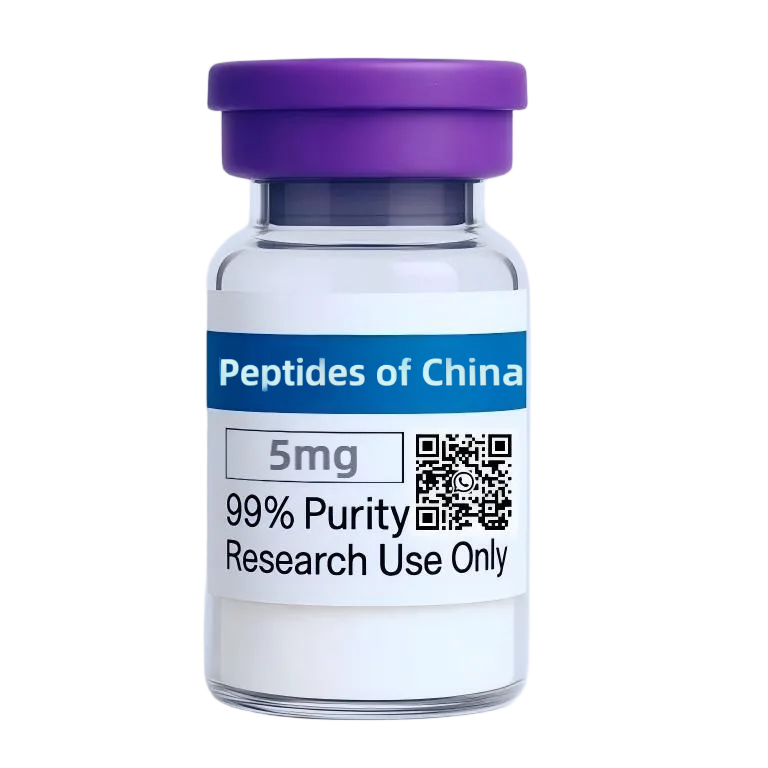
Bacteriostatic water with 0.9% benzyl alcohol for safe peptide reconstitution.
Benzyl Alcohol 0.9% (BAC) is a research compound available through our china peptide catalog as a finished, lyophilized vial from an established Chinese manufacturer. It belongs to the Bacteriostatic preservative solution (0.9% benzyl alcohol in water for injection) Benzyl Alcohol
Available Variants
| Name | Strength | Pack Size | Purity | Availability |
|---|---|---|---|---|
| (BAC) | 3 ml | 10 vials | Pharmaceutical grade | In Stock |
| (BAC) | 10 ml | 10 vials | — | In Stock |
| (BAC) | 10 ml | 10 vials | Pharmaceutical grade | In Stock |
| (BAC) | 30 ml | 10 vials | — | In Stock |
Specification Highlights
Quality & Testing
Testing method: Sterile / endotoxin tested . Products are supplied against the specification shown on the applicable product page. The standard catalog purity specification is ≥98% unless otherwise stated. Product-specific specifications and quality-control information may vary by compound and batch. Every batch is tested by the manufacturer for purity and concentration as part of routine quality control, using methods such as HPLC and LC-MS. These results are kept in the manufacturer’s internal quality-control records and are not issued as a separate certificate or document.
Variant Notes
Benzyl alcohol solution.
Research Areas
Multi-Dose Peptide Reconstitution BAC water’s bacteriostatic properties allow reconstituted peptide solutions to be stored for up to 28 days at 2-8°C without microbial growth, provided sterile technique is used. This multi-dose stability is critical for research protocols requiring repeated injections of the same peptide stock — daily or multiple times weekly — without preparing fresh solutions each time. Research has compared peptide stability in BAC water versus sterile water for injection over time, characterizing peptide degradation rates in the presence of benzyl alcohol versus in its absence. Vehicle Compatibility and Benzyl Alcohol Toxicology The compatibility of BAC water with specific peptides (charge, hydrophobicity, secondary structure stability) and with in vivo injection routes (subcutaneous, intravenous) has been examined in pharmacological research. Benzyl alcohol toxicology studies have characterized the concentration-dependent effects on mammalian cells — from bacteriostatic concentrations (0.9%) that are well-tolerated subcutaneously, to cytotoxic concentrations in cell culture. Vehicle control experiments in research must account for benzyl alcohol’s biological activity at the concentrations used. Solubility and pH Effects on Peptide Reconstitution BAC water’s slightly acidic pH (5.5-7.0) improves the solubility of basic peptides (high pI) compared to neutral PBS — basic peptides are less soluble near their isoelectric point. Research has examined how reconstitution pH affects peptide aggregation, secondary structure (CD spectroscopy), and biological activity in receptor binding assays. For peptides requiring acidic reconstitution (GHRH analogues), a small volume of dilute acetic acid is added before BAC water to achieve complete dissolution. ## Sourcing Benzyl Alcohol 0.9% (BAC) From China
Benzyl Alcohol 0.9% (BAC) is available through our platform as a china peptide sourced directly from an established Chinese manufacturer. Three points define how we handle it:
- Factory-direct, not trader-sourced. We confirm availability and specification with the manufacturer before the order is confirmed. There is no intermediary resale of unknown-origin vials in this catalog.
- Specification before shipment. The purity and concentration specification shown on this page is the manufacturer’s batch specification. Product-specific quality-control information travels with the order.
- Research-use discipline. Like every listing in our catalog, Benzyl Alcohol 0.9% (BAC) is supplied for laboratory research use only, under strict research-use terms.
For buyers comparing chinese peptides suppliers, the practical test is whether the seller can name the manufacturer and show the batch documentation. We work the other way around: the manufacturer and the documentation are the offer. Browse the full catalog or see how sourcing works.
Compound Profile
Bacteriostatic Water (BAC Water, 0.9% Benzyl Alcohol) is sterile water for injection containing 0.9% (w/v) benzyl alcohol as a bacteriostatic preservative. Benzyl alcohol inhibits bacterial growth by disrupting bacterial cell membranes and denaturing proteins, allowing the reconstituted solution to remain bacteriostatically protected at 2-8°C for up to 28 days — a significant advantage over sterile water for injection (SWFI), which must be used immediately after opening. This extended post-reconstitution shelf life makes BAC water the preferred peptide reconstitution vehicle for multi-dose research protocols. The benzyl alcohol concentration (0.9%) is calibrated to provide bacteriostatic protection without damaging mammalian cells at typical research injection volumes. However, benzyl alcohol has dose-dependent cytotoxicity at higher concentrations — a consideration in cell culture applications, where BAC water should be appropriately diluted and accounted for in vehicle control experiments. The osmolality of 0.9% benzyl alcohol solution is approximately 90 mOsm/kg, making it hypotonic relative to isotonic saline — researchers typically add isotonic diluent (PBS or saline) to achieve the target concentration and osmolality for in vivo administration. Peptides of China supplies Bacteriostatic Water (0.9% Benzyl Alcohol) as a sterile solution in sealed vials suitable for peptide reconstitution. Every batch is tested by the manufacturer for purity and concentration as part of routine quality control. All products are for laboratory research use only.
Profile
Available Variants
| Name | Strength | Pack Size | Purity | Availability |
|---|---|---|---|---|
| (BAC) | 3 ml | 10 vials | Pharmaceutical grade | In Stock |
| (BAC) | 10 ml | 10 vials | — | In Stock |
| (BAC) | 10 ml | 10 vials | Pharmaceutical grade | In Stock |
| (BAC) | 30 ml | 10 vials | — | In Stock |
Specification Highlights
Quality & Testing
Testing method: Sterile / endotoxin tested . Products are supplied against the specification shown on the applicable product page. The standard catalog purity specification is ≥98% unless otherwise stated. Product-specific specifications and quality-control information may vary by compound and batch. Every batch is tested by the manufacturer for purity and concentration as part of routine quality control, using methods such as HPLC and LC-MS. These results are kept in the manufacturer’s internal quality-control records and are not issued as a separate certificate or document.
Variant Notes
Benzyl alcohol solution.
Research Areas
Multi-Dose Peptide Reconstitution BAC water’s bacteriostatic properties allow reconstituted peptide solutions to be stored for up to 28 days at 2-8°C without microbial growth, provided sterile technique is used. This multi-dose stability is critical for research protocols requiring repeated injections of the same peptide stock — daily or multiple times weekly — without preparing fresh solutions each time. Research has compared peptide stability in BAC water versus sterile water for injection over time, characterizing peptide degradation rates in the presence of benzyl alcohol versus in its absence. Vehicle Compatibility and Benzyl Alcohol Toxicology The compatibility of BAC water with specific peptides (charge, hydrophobicity, secondary structure stability) and with in vivo injection routes (subcutaneous, intravenous) has been examined in pharmacological research. Benzyl alcohol toxicology studies have characterized the concentration-dependent effects on mammalian cells — from bacteriostatic concentrations (0.9%) that are well-tolerated subcutaneously, to cytotoxic concentrations in cell culture. Vehicle control experiments in research must account for benzyl alcohol’s biological activity at the concentrations used. Solubility and pH Effects on Peptide Reconstitution BAC water’s slightly acidic pH (5.5-7.0) improves the solubility of basic peptides (high pI) compared to neutral PBS — basic peptides are less soluble near their isoelectric point. Research has examined how reconstitution pH affects peptide aggregation, secondary structure (CD spectroscopy), and biological activity in receptor binding assays. For peptides requiring acidic reconstitution (GHRH analogues), a small volume of dilute acetic acid is added before BAC water to achieve complete dissolution.