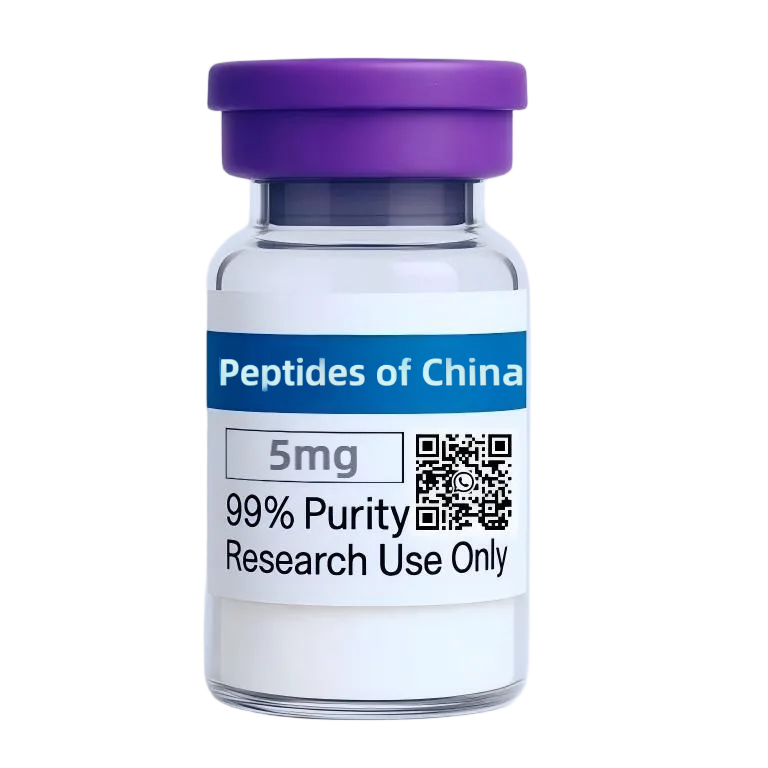
Advanced synthetic analog of Semax — itself a stabilized heptapeptide derivative of the ACTH(4-7) fragment — incorporating an adamantane-containing structural modification that enhances blood-brain ba
adamax-984-da is a research compound available through our china peptide catalog as a finished, lyophilized vial from an established Chinese manufacturer. It belongs to the Synthetic neuropeptide; advanced ACTH(4-7) analogue with adamantane modification
Research Areas
BDNF/NGF upregulation, neuroprotection, dopaminergic and serotonergic modulation, cognitive function, CNS bioavailability research
Available Variants
| Name | Strength | Pack Size | Purity | Availability |
|---|---|---|---|---|
| Adamax (984 Da) | 10 mg | 10 vials | >=98% | In Stock |
Specification Highlights
Quality & Testing
Testing method: HPLC / LC-MS . Products are supplied against the specification shown on the applicable product page. The standard catalog purity specification is ≥98% unless otherwise stated. Product-specific specifications and quality-control information may vary by compound and batch. Every batch is tested by the manufacturer for purity and concentration as part of routine quality control, using methods such as HPLC and LC-MS. These results are kept in the manufacturer’s internal quality-control records and are not issued as a separate certificate or document.
Research Areas
BDNF and NGF Upregulation The BDNF and NGF-upregulating activity established for Semax forms the primary neurotrophic research context for Adamax. In Semax studies, dose-dependent increases in BDNF mRNA (1.4–2.0-fold in hippocampus by RT-PCR) and NGF protein (ELISA) are documented at 25–250 μg/kg in rodents. Adamax, as a structurally enhanced analogue, is investigated for whether the adamantane modification shifts the effective dose range or prolongs the duration of neurotrophic factor induction — outcomes studied by pairing Adamax and Semax in the same in vivo BDNF/NGF measurement protocol. TrkB receptor antagonist (ANA-12) pre-treatment experiments are used to confirm BDNF-dependence of any observed downstream effects on synaptic plasticity, LTP, and behavioural cognitive endpoints. Blood-Brain Barrier Penetration and Pharmacokinetic Research The adamantane moiety is employed in CNS drug design specifically to enhance BBB permeability via increased lipophilicity and interaction with P-glycoprotein transport mechanisms. Comparative BBB penetration studies pairing Adamax (984 Da) against unmodified Semax use brain-to-plasma ratio measurements (LC-MS/MS of brain homogenate and plasma after matched i.v. and i.p. dosing) to quantify CNS exposure. Metabolic stability assays in plasma and liver microsome fractions characterise the enzymatic resistance conferred by the adamantane group, complementing the in vivo pharmacokinetic data. These studies are relevant to identifying compounds with improved CNS exposure-to-peripheral-dose ratios for neuroprotection and cognitive research applications. Dopaminergic and Serotonergic Neurotransmission Semax administration in rodent microdialysis studies is associated with increased dopamine turnover (elevated DOPAC/DA and HVA/DA ratios) and serotonin release in frontal cortical regions, without direct receptor agonism at dopaminergic or serotonergic sites — an indirect neuromodulatory mechanism distinct from psychostimulants. Adamax is studied in the same neurotransmitter profiling frameworks: in vivo microdialysis in striatum and prefrontal cortex, receptor binding assays (³H-SCH23390 and ³H-ketanserin displacement for D1 and 5-HT2A sites respectively), and behavioural endpoints sensitive to monoamine function (prepulse inhibition, forced swim test serotonin sensitivity). The adamantane modification’s effect on potency and duration in these monoaminergic assays is the primary pharmacological differentiation question versus the parent Semax. Neuroprotection in Ischaemia and Oxidative Stress Models Following the established neuroprotective profile of Semax in transient MCAO and global forebrain ischaemia models, Adamax is investigated in comparable experimental injury protocols. Endpoints include infarct volume quantification (TTC staining), neurological deficit scoring, and immunohistochemical markers of neuronal survival (NeuN, MAP2) and microglial activation state (Iba-1 polarisation). Proposed mechanisms of neuroprotection in this compound class — anti-excitotoxic modulation of NMDA receptor pathways, mitochondrial membrane stabilisation, and suppression of ischaemia-induced inflammatory cytokine release — are assessed using the adamantane analogue to characterise whether the pharmacokinetic improvements translate into a wider therapeutic window or lower effective dose in the injury models. ## Sourcing adamax-984-da From China
adamax-984-da is available through our platform as a china peptide sourced directly from an established Chinese manufacturer. Three points define how we handle it:
- Factory-direct, not trader-sourced. We confirm availability and specification with the manufacturer before the order is confirmed. There is no intermediary resale of unknown-origin vials in this catalog.
- Specification before shipment. The purity and concentration specification shown on this page is the manufacturer’s batch specification. Product-specific quality-control information travels with the order.
- Research-use discipline. Like every listing in our catalog, adamax-984-da is supplied for laboratory research use only, under strict research-use terms.
For buyers comparing chinese peptides suppliers, the practical test is whether the seller can name the manufacturer and show the batch documentation. We work the other way around: the manufacturer and the documentation are the offer. Browse the full catalog or see how sourcing works.
Available Variants
| Name | Strength | Pack Size | Purity | Availability |
|---|---|---|---|---|
| Adamax (984 Da) | 10 mg | 10 vials | >=98% | In Stock |
Specification Highlights
Quality & Testing
Testing method: HPLC / LC-MS . Products are supplied against the specification shown on the applicable product page. The standard catalog purity specification is ≥98% unless otherwise stated. Product-specific specifications and quality-control information may vary by compound and batch. Every batch is tested by the manufacturer for purity and concentration as part of routine quality control, using methods such as HPLC and LC-MS. These results are kept in the manufacturer’s internal quality-control records and are not issued as a separate certificate or document.
Research Areas
BDNF and NGF Upregulation The BDNF and NGF-upregulating activity established for Semax forms the primary neurotrophic research context for Adamax. In Semax studies, dose-dependent increases in BDNF mRNA (1.4–2.0-fold in hippocampus by RT-PCR) and NGF protein (ELISA) are documented at 25–250 μg/kg in rodents. Adamax, as a structurally enhanced analogue, is investigated for whether the adamantane modification shifts the effective dose range or prolongs the duration of neurotrophic factor induction — outcomes studied by pairing Adamax and Semax in the same in vivo BDNF/NGF measurement protocol. TrkB receptor antagonist (ANA-12) pre-treatment experiments are used to confirm BDNF-dependence of any observed downstream effects on synaptic plasticity, LTP, and behavioural cognitive endpoints. Blood-Brain Barrier Penetration and Pharmacokinetic Research The adamantane moiety is employed in CNS drug design specifically to enhance BBB permeability via increased lipophilicity and interaction with P-glycoprotein transport mechanisms. Comparative BBB penetration studies pairing Adamax (984 Da) against unmodified Semax use brain-to-plasma ratio measurements (LC-MS/MS of brain homogenate and plasma after matched i.v. and i.p. dosing) to quantify CNS exposure. Metabolic stability assays in plasma and liver microsome fractions characterise the enzymatic resistance conferred by the adamantane group, complementing the in vivo pharmacokinetic data. These studies are relevant to identifying compounds with improved CNS exposure-to-peripheral-dose ratios for neuroprotection and cognitive research applications. Dopaminergic and Serotonergic Neurotransmission Semax administration in rodent microdialysis studies is associated with increased dopamine turnover (elevated DOPAC/DA and HVA/DA ratios) and serotonin release in frontal cortical regions, without direct receptor agonism at dopaminergic or serotonergic sites — an indirect neuromodulatory mechanism distinct from psychostimulants. Adamax is studied in the same neurotransmitter profiling frameworks: in vivo microdialysis in striatum and prefrontal cortex, receptor binding assays (³H-SCH23390 and ³H-ketanserin displacement for D1 and 5-HT2A sites respectively), and behavioural endpoints sensitive to monoamine function (prepulse inhibition, forced swim test serotonin sensitivity). The adamantane modification’s effect on potency and duration in these monoaminergic assays is the primary pharmacological differentiation question versus the parent Semax. Neuroprotection in Ischaemia and Oxidative Stress Models Following the established neuroprotective profile of Semax in transient MCAO and global forebrain ischaemia models, Adamax is investigated in comparable experimental injury protocols. Endpoints include infarct volume quantification (TTC staining), neurological deficit scoring, and immunohistochemical markers of neuronal survival (NeuN, MAP2) and microglial activation state (Iba-1 polarisation). Proposed mechanisms of neuroprotection in this compound class — anti-excitotoxic modulation of NMDA receptor pathways, mitochondrial membrane stabilisation, and suppression of ischaemia-induced inflammatory cytokine release — are assessed using the adamantane analogue to characterise whether the pharmacokinetic improvements translate into a wider therapeutic window or lower effective dose in the injury models.
Compound Profile
Adamax (984 Da) is a synthetic neuropeptide structurally derived from Semax — the ACTH(4-7) heptapeptide analogue (Met-Glu-His-Phe-Pro-Gly-Pro) developed at the Institute of Molecular Genetics, Russian Academy of Sciences. Adamax incorporates an adamantane-containing structural modification into the Semax backbone, yielding a compound with a molecular mass of approximately 984 Daltons. This distinguishes it from the structurally related 1032 Da variant, which carries a different adamantane-derived modification. The adamantane moiety — a bicyclic cage hydrocarbon — is well-established in medicinal chemistry as a pharmacokinetic-enhancing modification: it increases lipophilicity and membrane permeability, improves metabolic stability against enzymatic degradation, and enhances central nervous system (CNS) penetration via the blood-brain barrier. Adamax’s pharmacological profile is mechanistically rooted in the Semax lineage. The parent compound, Semax, is one of the most extensively characterised ACTH(4-7) derivatives in neuroscience research — its primary documented effects include dose-dependent upregulation of brain-derived neurotrophic factor (BDNF) and nerve growth factor (NGF) mRNA and protein in hippocampal and cortical tissue, modulation of dopaminergic and serotonergic neurotransmission in limbic regions, and neuroprotective activity in cerebral ischaemia models. The adamantane modification in Adamax is studied for its potential to augment these effects through enhanced CNS bioavailability and prolonged duration of action, while retaining the core neurotrophic and neuromodulatory activity of the parent sequence. Peptides of China supplies Adamax (984 Da) as a lyophilized powder at 10 mg per vial, synthesized to ≥98% purity verified by HPLC and confirmed by mass spectrometry. Every batch is tested by the manufacturer for purity and concentration as part of routine quality control. All products are intended for laboratory research use only and are not for human consumption.
Profile
Research Areas
BDNF/NGF upregulation, neuroprotection, dopaminergic and serotonergic modulation, cognitive function, CNS bioavailability research
Available Variants
| Name | Strength | Pack Size | Purity | Availability |
|---|---|---|---|---|
| Adamax (984 Da) | 10 mg | 10 vials | >=98% | In Stock |
Specification Highlights
Quality & Testing
Testing method: HPLC / LC-MS . Products are supplied against the specification shown on the applicable product page. The standard catalog purity specification is ≥98% unless otherwise stated. Product-specific specifications and quality-control information may vary by compound and batch. Every batch is tested by the manufacturer for purity and concentration as part of routine quality control, using methods such as HPLC and LC-MS. These results are kept in the manufacturer’s internal quality-control records and are not issued as a separate certificate or document.
Research Areas
BDNF and NGF Upregulation The BDNF and NGF-upregulating activity established for Semax forms the primary neurotrophic research context for Adamax. In Semax studies, dose-dependent increases in BDNF mRNA (1.4–2.0-fold in hippocampus by RT-PCR) and NGF protein (ELISA) are documented at 25–250 μg/kg in rodents. Adamax, as a structurally enhanced analogue, is investigated for whether the adamantane modification shifts the effective dose range or prolongs the duration of neurotrophic factor induction — outcomes studied by pairing Adamax and Semax in the same in vivo BDNF/NGF measurement protocol. TrkB receptor antagonist (ANA-12) pre-treatment experiments are used to confirm BDNF-dependence of any observed downstream effects on synaptic plasticity, LTP, and behavioural cognitive endpoints. Blood-Brain Barrier Penetration and Pharmacokinetic Research The adamantane moiety is employed in CNS drug design specifically to enhance BBB permeability via increased lipophilicity and interaction with P-glycoprotein transport mechanisms. Comparative BBB penetration studies pairing Adamax (984 Da) against unmodified Semax use brain-to-plasma ratio measurements (LC-MS/MS of brain homogenate and plasma after matched i.v. and i.p. dosing) to quantify CNS exposure. Metabolic stability assays in plasma and liver microsome fractions characterise the enzymatic resistance conferred by the adamantane group, complementing the in vivo pharmacokinetic data. These studies are relevant to identifying compounds with improved CNS exposure-to-peripheral-dose ratios for neuroprotection and cognitive research applications. Dopaminergic and Serotonergic Neurotransmission Semax administration in rodent microdialysis studies is associated with increased dopamine turnover (elevated DOPAC/DA and HVA/DA ratios) and serotonin release in frontal cortical regions, without direct receptor agonism at dopaminergic or serotonergic sites — an indirect neuromodulatory mechanism distinct from psychostimulants. Adamax is studied in the same neurotransmitter profiling frameworks: in vivo microdialysis in striatum and prefrontal cortex, receptor binding assays (³H-SCH23390 and ³H-ketanserin displacement for D1 and 5-HT2A sites respectively), and behavioural endpoints sensitive to monoamine function (prepulse inhibition, forced swim test serotonin sensitivity). The adamantane modification’s effect on potency and duration in these monoaminergic assays is the primary pharmacological differentiation question versus the parent Semax. Neuroprotection in Ischaemia and Oxidative Stress Models Following the established neuroprotective profile of Semax in transient MCAO and global forebrain ischaemia models, Adamax is investigated in comparable experimental injury protocols. Endpoints include infarct volume quantification (TTC staining), neurological deficit scoring, and immunohistochemical markers of neuronal survival (NeuN, MAP2) and microglial activation state (Iba-1 polarisation). Proposed mechanisms of neuroprotection in this compound class — anti-excitotoxic modulation of NMDA receptor pathways, mitochondrial membrane stabilisation, and suppression of ischaemia-induced inflammatory cytokine release — are assessed using the adamantane analogue to characterise whether the pharmacokinetic improvements translate into a wider therapeutic window or lower effective dose in the injury models.