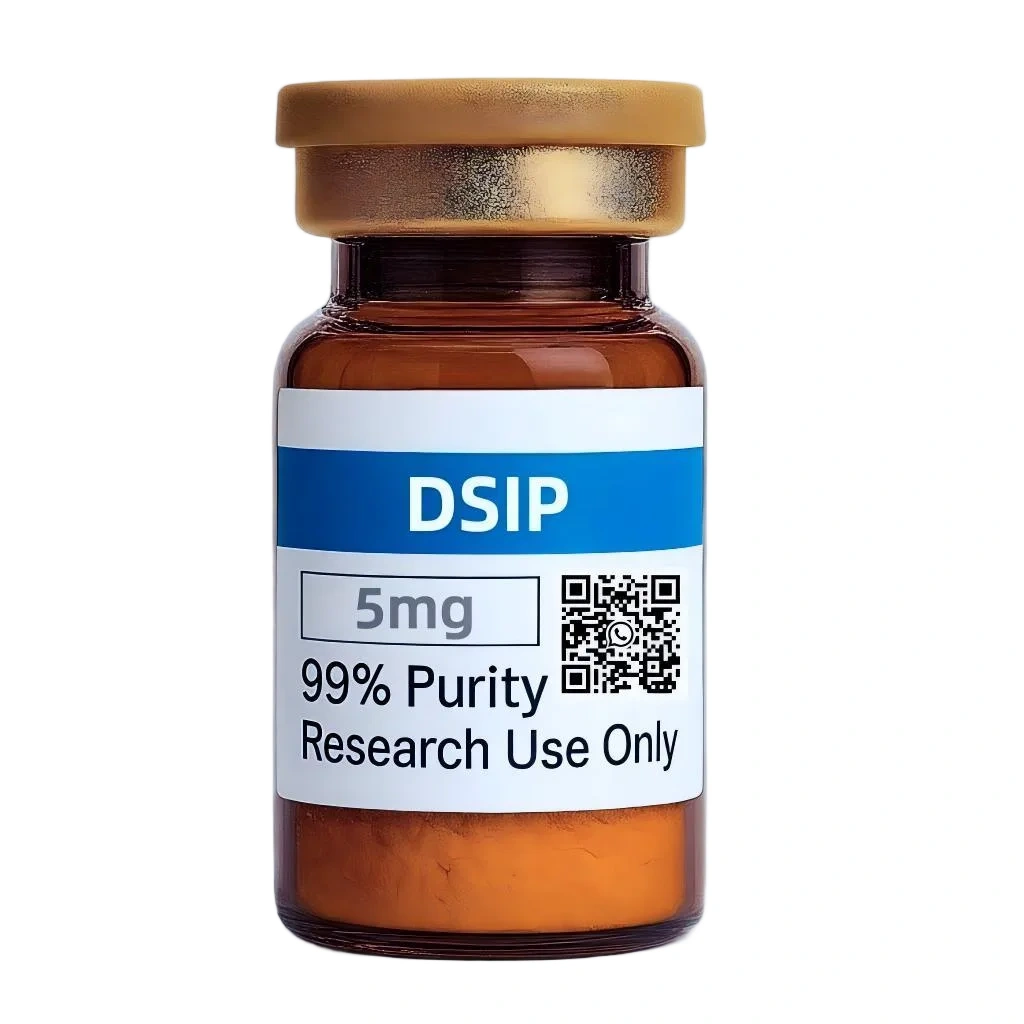
DSIP (Delta Sleep-Inducing Peptide) research grade, sourced from verified Chinese manufacturer. Batch number included.
DSIP is a research compound available through our china peptide catalog as a finished, lyophilized vial from an established Chinese manufacturer. It belongs to the Naturally occurring neuropeptide
Research Areas
Sleep neuroscience, neuroendocrine regulation, stress response, antioxidant signaling, CNS pharmacology
Available Variants
| Name | Strength | Pack Size | Purity | Availability |
|---|---|---|---|---|
| DSIP | 5 mg | 10 vials | — | In Stock |
| DSIP | 5 mg | 10 vials | ≥98% | In Stock |
| DSIP | 10 mg | 10 vials | ≥98% | In Stock |
| DSIP | 10 mg | 10 vials | — | In Stock |
| DSIP | 15 mg | 10 vials | — | Out of Stock |
| DSIP | 15 mg | 10 vials | — | In Stock |
Specification Highlights
Variant Notes
Research material containing dsip.
Research Areas
Sleep and EEG Research DSIP was originally characterized by its ability to induce slow-wave sleep in rabbits following cerebral perfusion. Subsequent rodent EEG studies have examined its effects on sleep architecture — specifically delta wave activity, sleep onset latency, and REM/NREM ratios. Research interest lies in understanding whether DSIP acts as an endogenous sleep-promoting signal and how its central concentrations correlate with sleep stage transitions. Neuroendocrine Axis Modulation Research has examined DSIP’s effects on hypothalamic-pituitary hormone release, including corticotropin (ACTH/cortisol axis) and LH (luteinizing hormone). Studies in stressed rodent models suggest DSIP may modulate the stress-activated HPA axis response. The mechanism is not fully characterized but appears to involve hypothalamic receptor interactions distinct from the primary sleep-induction pathway. Antioxidant and Cytoprotective Research An unexpected area of DSIP research involves its apparent antioxidant properties in cell culture and in vivo models. Studies have measured reactive oxygen species (ROS) reduction and mitochondrial protection markers following DSIP exposure in stress models. This cytoprotective activity is mechanistically distinct from its neuroendocrine effects and represents a secondary research interest in oxidative stress biology. ## Sourcing DSIP From China
DSIP is available through our platform as a china peptide sourced directly from an established Chinese manufacturer. Three points define how we handle it:
- Factory-direct, not trader-sourced. We confirm availability and specification with the manufacturer before the order is confirmed. There is no intermediary resale of unknown-origin vials in this catalog.
- Specification before shipment. The purity and concentration specification shown on this page is the manufacturer’s batch specification. Product-specific quality-control information travels with the order.
- Research-use discipline. Like every listing in our catalog, DSIP is supplied for laboratory research use only, under strict research-use terms.
For buyers comparing chinese peptides suppliers, the practical test is whether the seller can name the manufacturer and show the batch documentation. We work the other way around: the manufacturer and the documentation are the offer. Browse the full catalog or see how sourcing works.
Available Variants
| Name | Strength | Pack Size | Purity | Availability |
|---|---|---|---|---|
| DSIP | 5 mg | 10 vials | — | In Stock |
| DSIP | 5 mg | 10 vials | ≥98% | In Stock |
| DSIP | 10 mg | 10 vials | ≥98% | In Stock |
| DSIP | 10 mg | 10 vials | — | In Stock |
| DSIP | 15 mg | 10 vials | — | Out of Stock |
| DSIP | 15 mg | 10 vials | — | In Stock |
Specification Highlights
Variant Notes
Research material containing dsip.
Research Areas
Sleep and EEG Research DSIP was originally characterized by its ability to induce slow-wave sleep in rabbits following cerebral perfusion. Subsequent rodent EEG studies have examined its effects on sleep architecture — specifically delta wave activity, sleep onset latency, and REM/NREM ratios. Research interest lies in understanding whether DSIP acts as an endogenous sleep-promoting signal and how its central concentrations correlate with sleep stage transitions. Neuroendocrine Axis Modulation Research has examined DSIP’s effects on hypothalamic-pituitary hormone release, including corticotropin (ACTH/cortisol axis) and LH (luteinizing hormone). Studies in stressed rodent models suggest DSIP may modulate the stress-activated HPA axis response. The mechanism is not fully characterized but appears to involve hypothalamic receptor interactions distinct from the primary sleep-induction pathway. Antioxidant and Cytoprotective Research An unexpected area of DSIP research involves its apparent antioxidant properties in cell culture and in vivo models. Studies have measured reactive oxygen species (ROS) reduction and mitochondrial protection markers following DSIP exposure in stress models. This cytoprotective activity is mechanistically distinct from its neuroendocrine effects and represents a secondary research interest in oxidative stress biology.
Compound Profile
DSIP (Delta Sleep-Inducing Peptide) is a naturally occurring neuropeptide first isolated from rabbit cerebral venous blood during slow-wave sleep in 1977. The 9-amino acid sequence — Trp-Ala-Gly-Gly-Asp-Ala-Ser-Gly-Glu — exhibits amphiphilic properties that allow it to cross the blood-brain barrier, an unusual characteristic for peptides of its size. Research interest in DSIP spans neuroendocrine signaling, stress response modulation, and the neurochemistry of sleep-wake cycles. Preclinical studies in rodent models have examined DSIP in the context of EEG slow-wave activity, hypothalamic-pituitary axis interactions (particularly corticotropin and LH release), and stress-induced behavioral endpoints. Research has also explored DSIP’s antioxidant properties — an unexpected finding for a neuropeptide — and its potential role as a modulator of cellular stress responses under conditions of oxidative challenge. The compound’s amphiphilicity and CNS penetration make it a valuable pharmacological probe in neuroscience research. Peptides of China supplies DSIP as a lyophilized powder at 99%+ purity, verified by HPLC and Mass Spectrometry. Every batch is tested by the manufacturer for purity and concentration as part of routine quality control. All products are for laboratory research use only and are not for human consumption.
Profile
Research Areas
Sleep neuroscience, neuroendocrine regulation, stress response, antioxidant signaling, CNS pharmacology
Available Variants
| Name | Strength | Pack Size | Purity | Availability |
|---|---|---|---|---|
| DSIP | 5 mg | 10 vials | — | In Stock |
| DSIP | 5 mg | 10 vials | ≥98% | In Stock |
| DSIP | 10 mg | 10 vials | ≥98% | In Stock |
| DSIP | 10 mg | 10 vials | — | In Stock |
| DSIP | 15 mg | 10 vials | — | Out of Stock |
| DSIP | 15 mg | 10 vials | — | In Stock |
Specification Highlights
Variant Notes
Research material containing dsip.
Research Areas
Sleep and EEG Research DSIP was originally characterized by its ability to induce slow-wave sleep in rabbits following cerebral perfusion. Subsequent rodent EEG studies have examined its effects on sleep architecture — specifically delta wave activity, sleep onset latency, and REM/NREM ratios. Research interest lies in understanding whether DSIP acts as an endogenous sleep-promoting signal and how its central concentrations correlate with sleep stage transitions. Neuroendocrine Axis Modulation Research has examined DSIP’s effects on hypothalamic-pituitary hormone release, including corticotropin (ACTH/cortisol axis) and LH (luteinizing hormone). Studies in stressed rodent models suggest DSIP may modulate the stress-activated HPA axis response. The mechanism is not fully characterized but appears to involve hypothalamic receptor interactions distinct from the primary sleep-induction pathway. Antioxidant and Cytoprotective Research An unexpected area of DSIP research involves its apparent antioxidant properties in cell culture and in vivo models. Studies have measured reactive oxygen species (ROS) reduction and mitochondrial protection markers following DSIP exposure in stress models. This cytoprotective activity is mechanistically distinct from its neuroendocrine effects and represents a secondary research interest in oxidative stress biology.