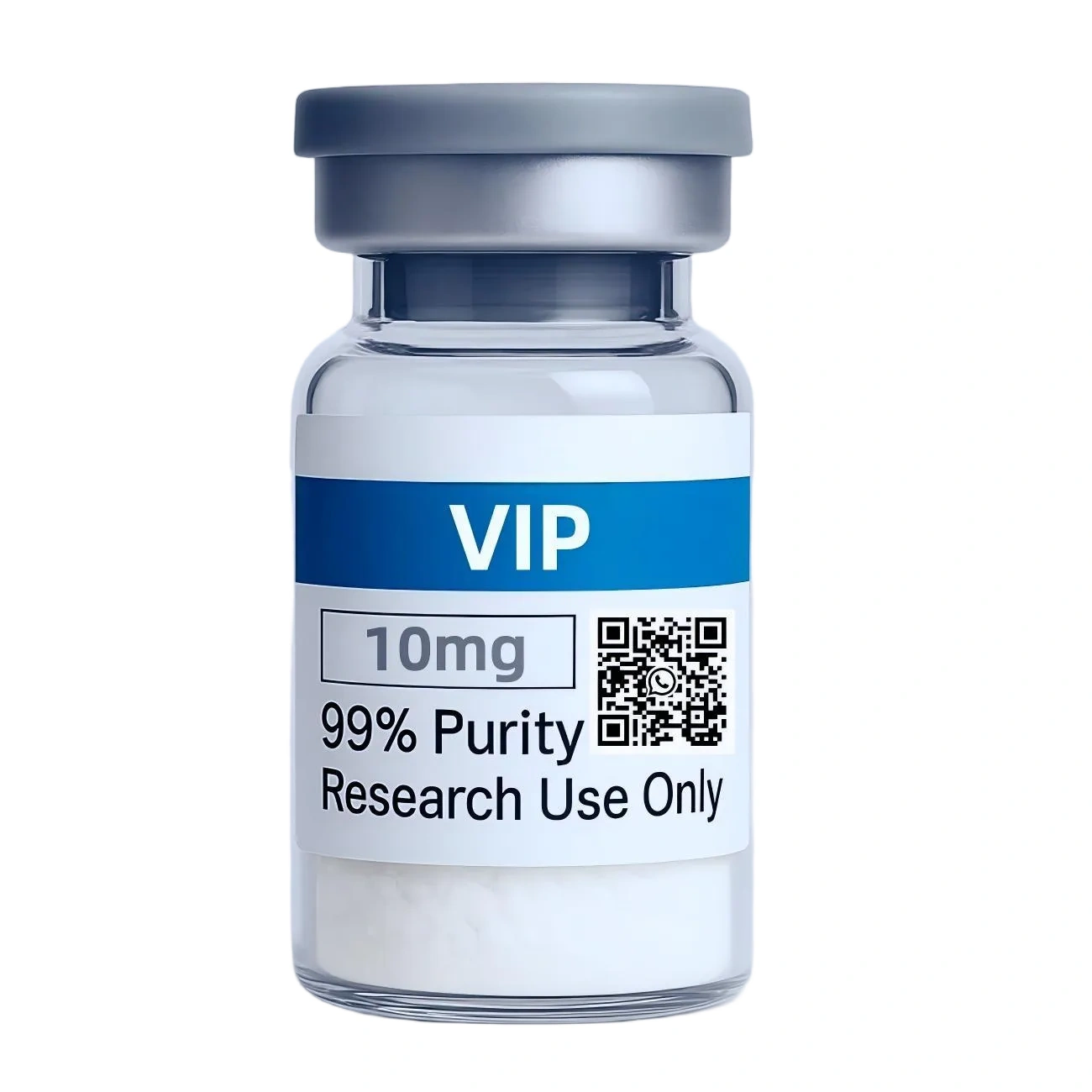
Vasoactive intestinal peptide — 28-amino acid neuropeptide. Subject of research into autonomic nervous system function, neuroimmune regulation, and anti-inflammatory signaling via VPAC receptors.
VIP is a research compound available through our china peptide catalog as a finished, lyophilized vial from an established Chinese manufacturer. It belongs to the Neuropeptide (glucagon/secretin superfamily)
Research Areas
Circadian biology, immunomodulation, neuroinflammation, smooth muscle pharmacology, exocrine signaling
Available Variants
| Name | Strength | Pack Size | Purity | Availability |
|---|---|---|---|---|
| VIP | 10 mg | 10 vials | ≥98% | In Stock |
Specification Highlights
Quality & Testing
Testing method: HPLC / LC-MS . Products are supplied against the specification shown on the applicable product page. The standard catalog purity specification is ≥98% unless otherwise stated. Product-specific specifications and quality-control information may vary by compound and batch. Every batch is tested by the manufacturer for purity and concentration as part of routine quality control, using methods such as HPLC and LC-MS. These results are kept in the manufacturer’s internal quality-control records and are not issued as a separate certificate or document.
Research Areas
Circadian Rhythm and SCN Research VIP is a critical neuromodulator in the suprachiasmatic nucleus (SCN), coordinating phase synchronization across circadian oscillator neurons via VPAC2 receptor signaling. Research has examined how VIP-null or VPAC2-null rodents develop desynchronized circadian rhythms at the cellular level, and how exogenous VIP application resets or synchronizes SCN explant cultures. This makes VIP an essential research tool in circadian biology — particularly for studying inter-neuronal communication within the master clock. Immunomodulation and Anti-Inflammatory Research VIP exhibits potent anti-inflammatory properties in preclinical models of inflammatory and autoimmune disease. Research has documented VIP suppression of macrophage TNF-α, IL-6, and IL-12 production via cAMP signaling, as well as promotion of Treg differentiation and reduction of Th1/Th17 responses. Rodent models of colitis, arthritis, and experimental autoimmune encephalomyelitis (EAE) have been used to examine VIP’s immunomodulatory profile. Smooth Muscle and Vascular Pharmacology VIP’s original characterization as a vasodilatory agent drives research into its pharmacology in smooth muscle tissues — including vascular, airway, and GI smooth muscle. VPAC1/VPAC2-mediated cAMP elevation produces smooth muscle relaxation, studied in contexts including pulmonary artery hypertension models, intestinal motility research, and bronchodilation studies. VIP provides a selective endogenous ligand tool for characterizing VPAC receptor function in smooth muscle physiology. ## Sourcing VIP From China
VIP is available through our platform as a china peptide sourced directly from an established Chinese manufacturer. Three points define how we handle it:
- Factory-direct, not trader-sourced. We confirm availability and specification with the manufacturer before the order is confirmed. There is no intermediary resale of unknown-origin vials in this catalog.
- Specification before shipment. The purity and concentration specification shown on this page is the manufacturer’s batch specification. Product-specific quality-control information travels with the order.
- Research-use discipline. Like every listing in our catalog, VIP is supplied for laboratory research use only, under strict research-use terms.
For buyers comparing chinese peptides suppliers, the practical test is whether the seller can name the manufacturer and show the batch documentation. We work the other way around: the manufacturer and the documentation are the offer. Browse the full catalog or see how sourcing works.
Available Variants
| Name | Strength | Pack Size | Purity | Availability |
|---|---|---|---|---|
| VIP | 10 mg | 10 vials | ≥98% | In Stock |
Specification Highlights
Quality & Testing
Testing method: HPLC / LC-MS . Products are supplied against the specification shown on the applicable product page. The standard catalog purity specification is ≥98% unless otherwise stated. Product-specific specifications and quality-control information may vary by compound and batch. Every batch is tested by the manufacturer for purity and concentration as part of routine quality control, using methods such as HPLC and LC-MS. These results are kept in the manufacturer’s internal quality-control records and are not issued as a separate certificate or document.
Research Areas
Circadian Rhythm and SCN Research VIP is a critical neuromodulator in the suprachiasmatic nucleus (SCN), coordinating phase synchronization across circadian oscillator neurons via VPAC2 receptor signaling. Research has examined how VIP-null or VPAC2-null rodents develop desynchronized circadian rhythms at the cellular level, and how exogenous VIP application resets or synchronizes SCN explant cultures. This makes VIP an essential research tool in circadian biology — particularly for studying inter-neuronal communication within the master clock. Immunomodulation and Anti-Inflammatory Research VIP exhibits potent anti-inflammatory properties in preclinical models of inflammatory and autoimmune disease. Research has documented VIP suppression of macrophage TNF-α, IL-6, and IL-12 production via cAMP signaling, as well as promotion of Treg differentiation and reduction of Th1/Th17 responses. Rodent models of colitis, arthritis, and experimental autoimmune encephalomyelitis (EAE) have been used to examine VIP’s immunomodulatory profile. Smooth Muscle and Vascular Pharmacology VIP’s original characterization as a vasodilatory agent drives research into its pharmacology in smooth muscle tissues — including vascular, airway, and GI smooth muscle. VPAC1/VPAC2-mediated cAMP elevation produces smooth muscle relaxation, studied in contexts including pulmonary artery hypertension models, intestinal motility research, and bronchodilation studies. VIP provides a selective endogenous ligand tool for characterizing VPAC receptor function in smooth muscle physiology.
Compound Profile
VIP (Vasoactive Intestinal Peptide) is a 28-amino acid neuropeptide and member of the glucagon/secretin superfamily, widely expressed throughout the central and peripheral nervous systems as well as in gut mucosa and immune tissues. Originally isolated from porcine intestine based on its potent vasodilatory activity, VIP has since been recognized as a pleiotropic regulatory peptide with roles in neurotransmission, smooth muscle relaxation, exocrine secretion, circadian rhythm regulation, and immunomodulation. It acts primarily via VPAC1 and VPAC2 G protein-coupled receptors (coupled to Gs-cAMP signaling), with secondary activity at PAC1 receptors shared with the structurally related PACAP. Research into VIP spans neuroscience, immunology, and endocrinology. In the CNS, VIP is a key co-transmitter in the suprachiasmatic nucleus (SCN) — the master circadian pacemaker — where it coordinates circadian gene expression across neuronal populations. In the immune system, VIP acts as an anti-inflammatory mediator, suppressing macrophage activation, reducing pro-inflammatory cytokine production (TNF-α, IL-6, IL-12), and promoting regulatory T cell (Treg) differentiation — a profile of research interest in inflammatory and autoimmune disease models. Peptides of China supplies VIP as a lyophilized powder at 99%+ purity, verified by HPLC and Mass Spectrometry. Every batch is tested by the manufacturer for purity and concentration as part of routine quality control. All products are for laboratory research use only and are not for human consumption.
Profile
Research Areas
Circadian biology, immunomodulation, neuroinflammation, smooth muscle pharmacology, exocrine signaling
Available Variants
| Name | Strength | Pack Size | Purity | Availability |
|---|---|---|---|---|
| VIP | 10 mg | 10 vials | ≥98% | In Stock |
Specification Highlights
Quality & Testing
Testing method: HPLC / LC-MS . Products are supplied against the specification shown on the applicable product page. The standard catalog purity specification is ≥98% unless otherwise stated. Product-specific specifications and quality-control information may vary by compound and batch. Every batch is tested by the manufacturer for purity and concentration as part of routine quality control, using methods such as HPLC and LC-MS. These results are kept in the manufacturer’s internal quality-control records and are not issued as a separate certificate or document.
Research Areas
Circadian Rhythm and SCN Research VIP is a critical neuromodulator in the suprachiasmatic nucleus (SCN), coordinating phase synchronization across circadian oscillator neurons via VPAC2 receptor signaling. Research has examined how VIP-null or VPAC2-null rodents develop desynchronized circadian rhythms at the cellular level, and how exogenous VIP application resets or synchronizes SCN explant cultures. This makes VIP an essential research tool in circadian biology — particularly for studying inter-neuronal communication within the master clock. Immunomodulation and Anti-Inflammatory Research VIP exhibits potent anti-inflammatory properties in preclinical models of inflammatory and autoimmune disease. Research has documented VIP suppression of macrophage TNF-α, IL-6, and IL-12 production via cAMP signaling, as well as promotion of Treg differentiation and reduction of Th1/Th17 responses. Rodent models of colitis, arthritis, and experimental autoimmune encephalomyelitis (EAE) have been used to examine VIP’s immunomodulatory profile. Smooth Muscle and Vascular Pharmacology VIP’s original characterization as a vasodilatory agent drives research into its pharmacology in smooth muscle tissues — including vascular, airway, and GI smooth muscle. VPAC1/VPAC2-mediated cAMP elevation produces smooth muscle relaxation, studied in contexts including pulmonary artery hypertension models, intestinal motility research, and bronchodilation studies. VIP provides a selective endogenous ligand tool for characterizing VPAC receptor function in smooth muscle physiology.