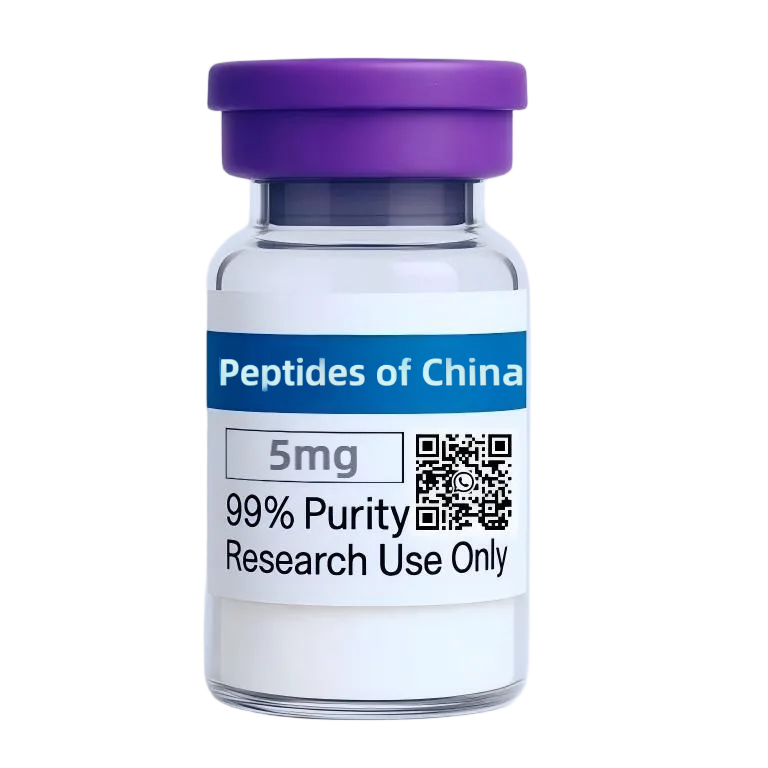
Synthetic decapeptide identical to endogenous GnRH. Used as a research tool to study pituitary LH and FSH secretion dynamics and hypothalamic-pituitary-gonadal axis function.
Gonadorelin Acetate is a research compound available through our china peptide catalog as a finished, lyophilized vial from an established Chinese manufacturer. It belongs to the Hypothalamic decapeptide / GnRH agonist (acetate salt) Sequence pGlu-His-Trp-Ser-Tyr-Gly-Leu-Arg-Pro-Gly-NH₂
Research Areas
HPG axis physiology, pituitary gonadotroph function, pulsatile neuroendocrine signaling, reproductive endocrinology
Available Variants
| Name | Strength | Pack Size | Purity | Availability |
|---|---|---|---|---|
| Gonadorelin Acetate | 2 mg | 10 vials | ≥98% | In Stock |
Specification Highlights
Quality & Testing
Testing method: HPLC / LC-MS . Products are supplied against the specification shown on the applicable product page. The standard catalog purity specification is ≥98% unless otherwise stated. Product-specific specifications and quality-control information may vary by compound and batch. Every batch is tested by the manufacturer for purity and concentration as part of routine quality control, using methods such as HPLC and LC-MS. These results are kept in the manufacturer’s internal quality-control records and are not issued as a separate certificate or document.
Research Areas
Pulsatile GnRH Signaling Research Physiological GnRH is released in discrete pulses (~1/hour in adult mammals), and GnRHR responds differentially to pulsatile versus continuous stimulation. Research has used gonadorelin acetate in programmable infusion protocols in rodent models to study how pulse frequency modulates pituitary FSH/LH output ratio, and how pulsatile stimulation maintains versus desensitizes GnRHR. These experiments are foundational in understanding the frequency-encoding capacity of hypothalamic-pituitary signaling. GnRH Receptor Pharmacology Gonadorelin acetate serves as the reference GnRHR agonist in receptor binding displacement assays (competing against radiolabeled GnRH analogues) and in functional Gq-IP3-Ca²⁺ signaling studies in pituitary cell cultures. Structure-activity research comparing gonadorelin with synthetic GnRH analogues (buserelin, leuprolide) that have modified position 6 or 10 has defined the GnRHR pharmacophore and the structural requirements for receptor activation versus sustained agonism. HPG Axis Studies and Fertility Research In rodent models of hypogonadotropic hypogonadism (caused by GnRH neuron ablation, kisspeptin deficiency, or hypothalamic lesions), gonadorelin administered in a pulsatile fashion has been studied for its ability to restore gonadotropin secretion and gonadal function. This research directly models the use of pulsatile GnRH in the treatment of idiopathic hypogonadotropic hypogonadism and contributes to understanding of the minimal GnRH signal required to maintain reproductive axis function. ## Sourcing Gonadorelin Acetate From China
Gonadorelin Acetate is available through our platform as a china peptide sourced directly from an established Chinese manufacturer. Three points define how we handle it:
- Factory-direct, not trader-sourced. We confirm availability and specification with the manufacturer before the order is confirmed. There is no intermediary resale of unknown-origin vials in this catalog.
- Specification before shipment. The purity and concentration specification shown on this page is the manufacturer’s batch specification. Product-specific quality-control information travels with the order.
- Research-use discipline. Like every listing in our catalog, Gonadorelin Acetate is supplied for laboratory research use only, under strict research-use terms.
For buyers comparing chinese peptides suppliers, the practical test is whether the seller can name the manufacturer and show the batch documentation. We work the other way around: the manufacturer and the documentation are the offer. Browse the full catalog or see how sourcing works.
Available Variants
| Name | Strength | Pack Size | Purity | Availability |
|---|---|---|---|---|
| Gonadorelin Acetate | 2 mg | 10 vials | ≥98% | In Stock |
Specification Highlights
Quality & Testing
Testing method: HPLC / LC-MS . Products are supplied against the specification shown on the applicable product page. The standard catalog purity specification is ≥98% unless otherwise stated. Product-specific specifications and quality-control information may vary by compound and batch. Every batch is tested by the manufacturer for purity and concentration as part of routine quality control, using methods such as HPLC and LC-MS. These results are kept in the manufacturer’s internal quality-control records and are not issued as a separate certificate or document.
Research Areas
Pulsatile GnRH Signaling Research Physiological GnRH is released in discrete pulses (~1/hour in adult mammals), and GnRHR responds differentially to pulsatile versus continuous stimulation. Research has used gonadorelin acetate in programmable infusion protocols in rodent models to study how pulse frequency modulates pituitary FSH/LH output ratio, and how pulsatile stimulation maintains versus desensitizes GnRHR. These experiments are foundational in understanding the frequency-encoding capacity of hypothalamic-pituitary signaling. GnRH Receptor Pharmacology Gonadorelin acetate serves as the reference GnRHR agonist in receptor binding displacement assays (competing against radiolabeled GnRH analogues) and in functional Gq-IP3-Ca²⁺ signaling studies in pituitary cell cultures. Structure-activity research comparing gonadorelin with synthetic GnRH analogues (buserelin, leuprolide) that have modified position 6 or 10 has defined the GnRHR pharmacophore and the structural requirements for receptor activation versus sustained agonism. HPG Axis Studies and Fertility Research In rodent models of hypogonadotropic hypogonadism (caused by GnRH neuron ablation, kisspeptin deficiency, or hypothalamic lesions), gonadorelin administered in a pulsatile fashion has been studied for its ability to restore gonadotropin secretion and gonadal function. This research directly models the use of pulsatile GnRH in the treatment of idiopathic hypogonadotropic hypogonadism and contributes to understanding of the minimal GnRH signal required to maintain reproductive axis function.
Compound Profile
Gonadorelin acetate is the synthetic form of GnRH (gonadotropin-releasing hormone), the endogenous hypothalamic decapeptide that controls the reproductive axis by stimulating pituitary release of LH (luteinizing hormone) and FSH (follicle-stimulating hormone). The native sequence — pGlu-His-Trp-Ser-Tyr-Gly-Leu-Arg-Pro-Gly-NH₂ — is highly conserved across vertebrates, and gonadorelin acetate reproduces this sequence in synthetic form with acetic acid as the counterion. As the endogenous GnRH agonist (unmodified), gonadorelin has a very short plasma half-life (~2-8 minutes), which is clinically and experimentally exploited: pulsatile administration mimics endogenous GnRH physiology, while continuous infusion produces pituitary GnRH receptor desensitization and LH/FSH suppression. Research applications for gonadorelin acetate span reproductive endocrinology, pituitary pharmacology, and HPG axis physiology. It is used as the reference GnRH agonist in pituitary cell culture studies of LH and FSH secretion, in GnRH receptor binding assays, and in in vivo rodent models examining pulsatile versus continuous GnRH stimulation on pituitary gonadotroph function. The pulsatile dosing paradigm — reproducing the ~1 pulse/hour physiological pattern — is particularly studied in hypogonadotropic hypogonadism models and in research into the entrainment of the pituitary to hypothalamic GnRH pulse frequency. Peptides of China supplies Gonadorelin acetate as a lyophilized powder at 99%+ purity, verified by HPLC and Mass Spectrometry. Every batch is tested by the manufacturer for purity and concentration as part of routine quality control. All products are for laboratory research use only and are not for human consumption.
Profile
Sequence pGlu-His-Trp-Ser-Tyr-Gly-Leu-Arg-Pro-Gly-NH₂
Research Areas
HPG axis physiology, pituitary gonadotroph function, pulsatile neuroendocrine signaling, reproductive endocrinology
Available Variants
| Name | Strength | Pack Size | Purity | Availability |
|---|---|---|---|---|
| Gonadorelin Acetate | 2 mg | 10 vials | ≥98% | In Stock |
Specification Highlights
Quality & Testing
Testing method: HPLC / LC-MS . Products are supplied against the specification shown on the applicable product page. The standard catalog purity specification is ≥98% unless otherwise stated. Product-specific specifications and quality-control information may vary by compound and batch. Every batch is tested by the manufacturer for purity and concentration as part of routine quality control, using methods such as HPLC and LC-MS. These results are kept in the manufacturer’s internal quality-control records and are not issued as a separate certificate or document.
Research Areas
Pulsatile GnRH Signaling Research Physiological GnRH is released in discrete pulses (~1/hour in adult mammals), and GnRHR responds differentially to pulsatile versus continuous stimulation. Research has used gonadorelin acetate in programmable infusion protocols in rodent models to study how pulse frequency modulates pituitary FSH/LH output ratio, and how pulsatile stimulation maintains versus desensitizes GnRHR. These experiments are foundational in understanding the frequency-encoding capacity of hypothalamic-pituitary signaling. GnRH Receptor Pharmacology Gonadorelin acetate serves as the reference GnRHR agonist in receptor binding displacement assays (competing against radiolabeled GnRH analogues) and in functional Gq-IP3-Ca²⁺ signaling studies in pituitary cell cultures. Structure-activity research comparing gonadorelin with synthetic GnRH analogues (buserelin, leuprolide) that have modified position 6 or 10 has defined the GnRHR pharmacophore and the structural requirements for receptor activation versus sustained agonism. HPG Axis Studies and Fertility Research In rodent models of hypogonadotropic hypogonadism (caused by GnRH neuron ablation, kisspeptin deficiency, or hypothalamic lesions), gonadorelin administered in a pulsatile fashion has been studied for its ability to restore gonadotropin secretion and gonadal function. This research directly models the use of pulsatile GnRH in the treatment of idiopathic hypogonadotropic hypogonadism and contributes to understanding of the minimal GnRH signal required to maintain reproductive axis function.